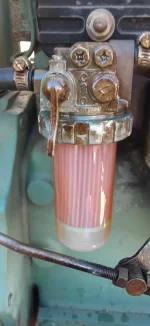
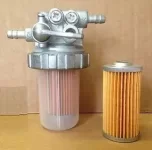
Yanmar diesel fuel filter

bmaverick

Member
1763844093739.webp

This fuel filter is used on many of the Yanmar models along with several other major Japan made tractor brands. Ie, Mitsubishi, Iseki, Hinomoto, Shibarura, Satoh, Kubota, etc.

Some people know the basics and others have not yet experienced how to check, change, and bleed them.

When it comes to these filters, looks are everything.

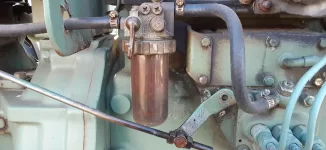
This one here is bad. Not extremely bad.
1763844118017.webp

Notice the brown root-beer color. See the cloudiness too. This is getting bad.
Best to change it now and not when the machine quits in the deep cold winter ahead.

Still not convinced? Gravity brings all of the sediment to the bottom of the bowl. The darker this is, the worse it becomes in the fuel system. A black bottom is real danger due to micro build up. This is still dark brown.
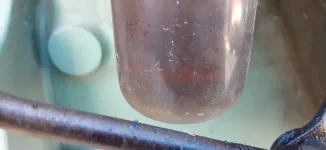
1763844139801.webp

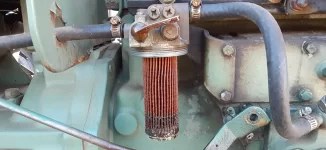
Removing the lock-ring and the fuel bowl reveals bad news. Micro contamination is starting.
1763844160265.webp

A closer look. ewww.

1763844183454.webp

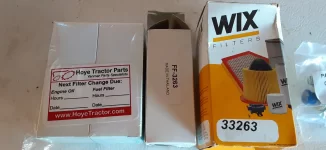
For the tall filter, the common WIX 33263 is the go to, however, these are pricey.

These filters are common in Japan for small engines and motorcycles.
1763844206135.webp

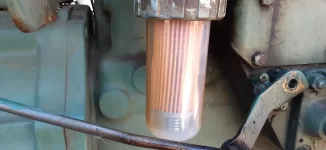
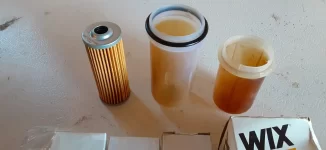
My machine came with the proper small bowl and filter, however to spot this dark color, cloudiness and contamination in time, the tall bowl is really needed. Seeing this in the small bowl with filter is way too late.

1763844228897.webp
 
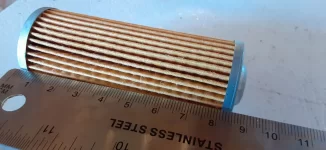
This is the size for the Tall filter. 33mm x 84mm-ish.

1763844268269.webp

1763844277973.webp

These Hoye tall filters are marked P4J1, Made in Thailand.

1763844301079.webp

A new and used pair.

1763844323265.webp
 
Cleaning the bowls in gasoline with an old toothbrush helps.

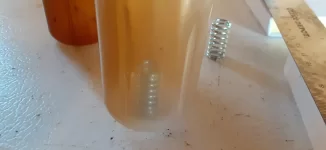
Once cleaned place in the bottom spring. This presses the filter upwards to remain secure with no by-pass of fuel to the fuel pump. If your spring is missing. Do not use the tractor. It would be wise to nab a spring kit from Harbor Freight for a few dollars and have 4 good springs that work for the next 20 years.

To place the spring inside, place it on a long screw driver, then point the screw driver upwards, next place the bowl over the top. Now flip it over. Tada, the spring is aligned and in place. Yet not seated. To seat the spring, use the screw driver handle and press the spring downwards. Done.

1763844362847.webp

1763844372940.webp

1763844383049.webp

Push the filter up into the tractor filter housing. Next bring up the fuel bowl with the o-ring.
Bring up the lock-ring and begin tightening it till firm.

1763844408218.webp

Now this is the look we are after. Clean and clear at the bottom.

1763844436276.webp

1763844446498.webp

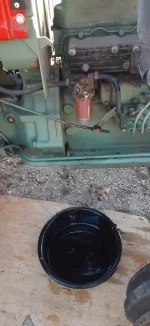
Lastly, to bleed the air out.

The bleeder screw closest to the fuel tank, back until the air is burped out and fuel dribbles out. Next do the same for the screw next to it. The next screw burps out rather quickly.

1763844480110.webp
 
OK. I've never heard them nor read in the manuals being defined as cans. I thought I was missing something.

The clear plastic bowls vs the original GLASS bowls, are prone to hairline vertical cracking. Should anyone notice their bowl with vertical hairline cracks or grazing, best to change it right away. As the fuel is suctioned from the fuel pump, these hairline cracks will draw in air. The tractor Hp will drop significantly making a person believe the compression is lost.

The old glass bowls didn't have this problem. Yet, those had their own issues too. Glass can shatter or just break dropping all the fuel out of the tank quickly. Much of the time, this took place in frigid cold negative temps.

If you were out in a field, over a few acres from the garage, and the plastic bowl acts up, having a roll of electrical tape would greatly help out by wrapping around the fuel bowl to get back home.
 
Top